

How diesel generator engine work?
Date: Jan 14, 2015 Source: Hamac Machinery
The diesel internal combustion engine differs from the gasoline powered Otto cycle by using highly compressed, hot air to ignite the fuel rather than using a spark plug (compression ignition rather than spark ignition).
In the true diesel engine, only air is initially introduced into the combustion chamber. The air is then compressed with a compression ratio typically between 15:1 and 22:1 resulting in 40-bar (4.0 MPa; 580 psi) pressure compared to 8 to 14 bars (0.80 to 1.4 MPa) (about 200 psi) in the petrol engine. This high compression heats the air to 550 °C (1,022 °F). At about the top of the compression stroke, fuel is injected directly into the compressed air in the combustion chamber. This may be into a (typically thyroidal) void in the top of the piston or a pre-chamber depending upon the design of the engine. The fuel injector ensures that the fuel is broken down into small droplets,and that the fuel is distributed evenly.
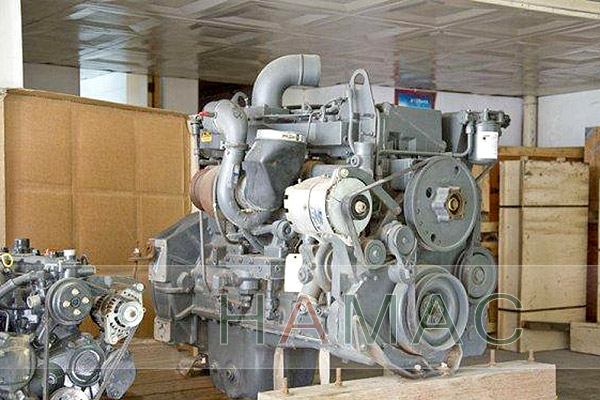
The heat of the compressed air vaporizes fuel from the surface of the droplets. The vapor is then ignited by the heat from the compressed air in the combustion chamber, the droplets continue to vaporize from their surfaces and burn,getting smaller, until all the fuel in the droplets has been burnt. The start of vaporization causes a delay period during ignition and the characteristic diesel knocking sound as the vapor reaches ignition temperature and causes an abrupt increase in pressure above the piston. The rapid expansion of combustion gases then drives the piston downward, supplying power to the crankshaft. Engines for scale-model hydroplanes use a variant of the Diesel principle but premix fuel and air via a carbonation system external to the combustion chambers.
As well as the high level of compression allowing combustion to take place without a separate ignition system, a high compression ratio greatly increases the engine’s efficiency. Increasing the compression ratio in a spark-ignition engine where fuel and air are mixed before entry to the cylinder is limited by the need to prevent damaging pre-ignition. Since only air is compressed in a diesel engine, and fuel is not introduced into the cylinder until shortly before top dead center (TDC), premature detonation is not an issue and compression ratios are much higher.
Previous: 30KVA Diesel Generator Set
Next: 500KW Cummins Diesel Generator Set
